Big drop in motorcycle theft on the horizon?
The Motorcycle Action Group (MAG) can see potential for a big drop in motorcycle theft in the coming […]

The Motorcycle Action Group (MAG) is a Riders' Rights Organisation that champions and promotes motorcycling in the UK. Become a member to attend our national and local events and enjoy many of the benefits we have to offer.

Find a Fight Motorcycle Theft meeting in your area
Ask your PCC to take the Fight Motorcycle Theft pledge

New Pothole Campaign: Resurface Our Roads
MAG’s campaign to make road surfaces safe for motorcyclists to use

Announcement imminent on the ban of petrol-powered motorcycles.
Watch on the MAG YouTube channel now
The Motorcycle Action Group (MAG) can see potential for a big drop in motorcycle theft in the coming […]

The Motorcycle Action Group is making a bold but completely practical demand for motorcyclists to be allowed waiting […]

Motorcyclists are being invited to take part in the Great MAG Road Maintenance Treasure Hunt. Riders will be […]

The Government has launched a consultation on default access for motorcycles in bus lanes. MAG has been fighting […]

The Motorcycle Action Group (MAG) announces the latest in its Fight Motorcycle Theft public meeting tour. London’s City […]

The Motorcycle Action Group (MAG) has launched the Fight Motorcycle Theft Pledge ahead of May’s Police and Crime […]

The Motorcycle Action Group (MAG), the UK’s leading voice for riders’ rights, prepares for another busy year defending […]

MAG’s primary mission is to protect and promote the interests of motorcyclists in the UK. We have many […]
The Motorcycle Action Group Limited (MAG) is highly motivated, lean, efficient, economic and very effective. The Motorcycle Action group funding is based on the fact that we are a non-profit making organisation and all income is reinvested into campaigning and lobbying in pursuit of the MAG Mission. If you would like to donate to our fighting fund please use the link below.
Paypal


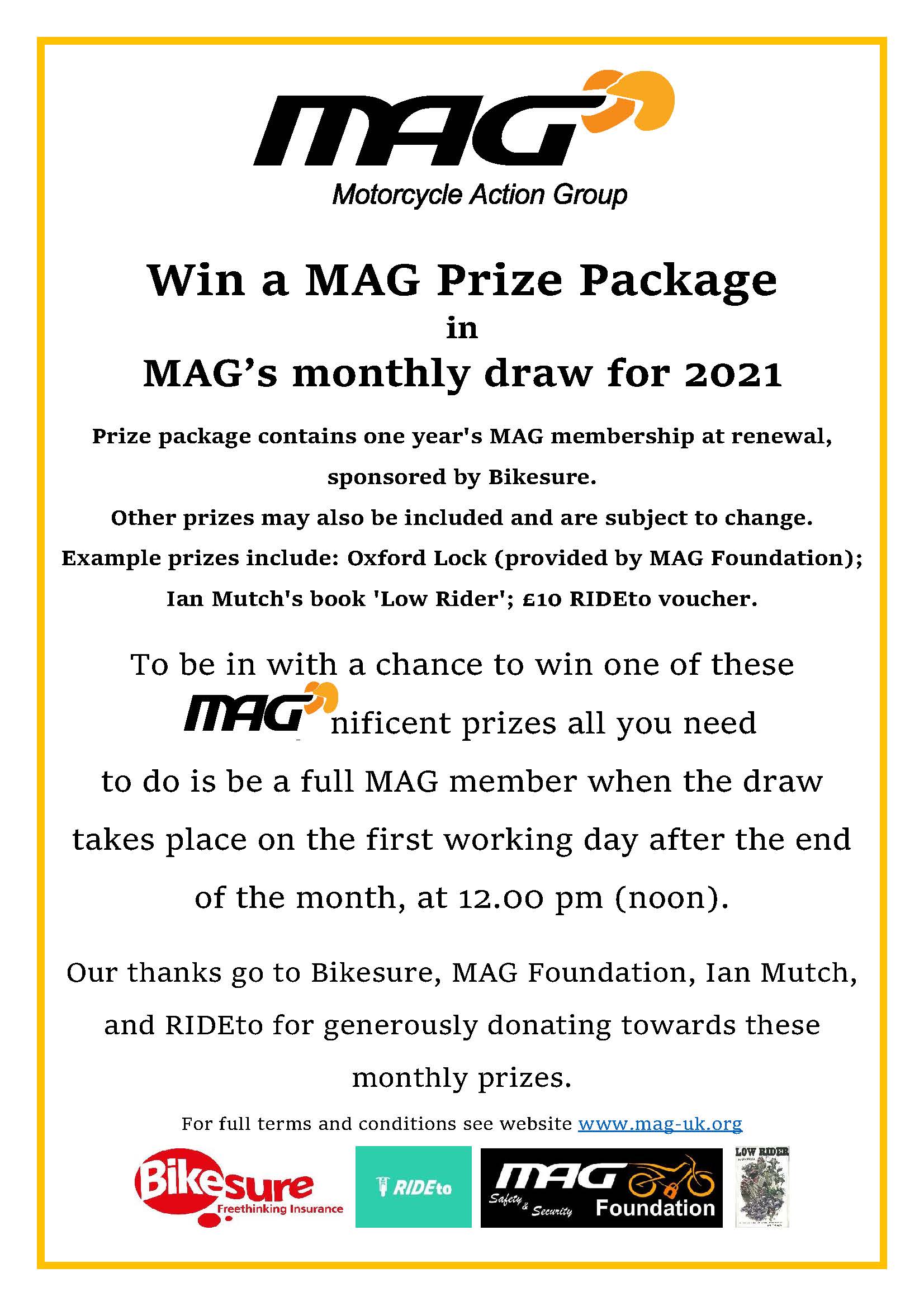
Our monthly prize draw:
As before, you need to be a full MAG member to be automatically entered into the draw.
Join or renew here: Membership